



Why Generative AI Is About to Revolutionize Safety in the Construction Industry
The Role of AI in Construction Safety: Revolutionizing the Industry Introduction to AI in Construction Safety The integration of artificial intelligence (AI) in construction safety is not only...

The Role of AI in Construction Safety: Revolutionizing the Industry
Table Of Content
- Introduction to AI in Construction Safety
- Advantages of AI Technology in Construction
- Generative AI as a Game Changer
- Innovative Safety Tools Powered by AI
- The Role of Occupational Safety and Health Administration (OSHA)
- Case Studies of Successful AI Implementations
- Future Trends in AI for Construction Safety
- Conclusion
Introduction to AI in Construction Safety
The integration of artificial intelligence (AI) in construction safety is not only revolutionizing the industry but is rapidly becoming a necessity in enhancing overall job site security. With the construction industry being one of the most hazardous sectors, the potential of AI technology to reshape safety protocols cannot be overstated. AI’s ability to anticipate, identify, and mitigate risks can lead to a substantial decline in workplace accidents, ushering a new era of predictive safety.
Advantages of AI Technology in Construction
AI technology offers a myriad of advantages tailored to boosting construction safety. These advancements range from predictive analytics that forecast potential risks to AI-powered drones that conduct site inspections, ensuring compliance with safety regulations. Through machine learning, AI systems are continuously evolving, enhancing their precision in detecting hazards and thus preemptively addressing potential safety issues.
– Predictive Analytics: AI algorithms analyze vast amounts of data to forecast accidents, helping safety managers implement preventive measures.
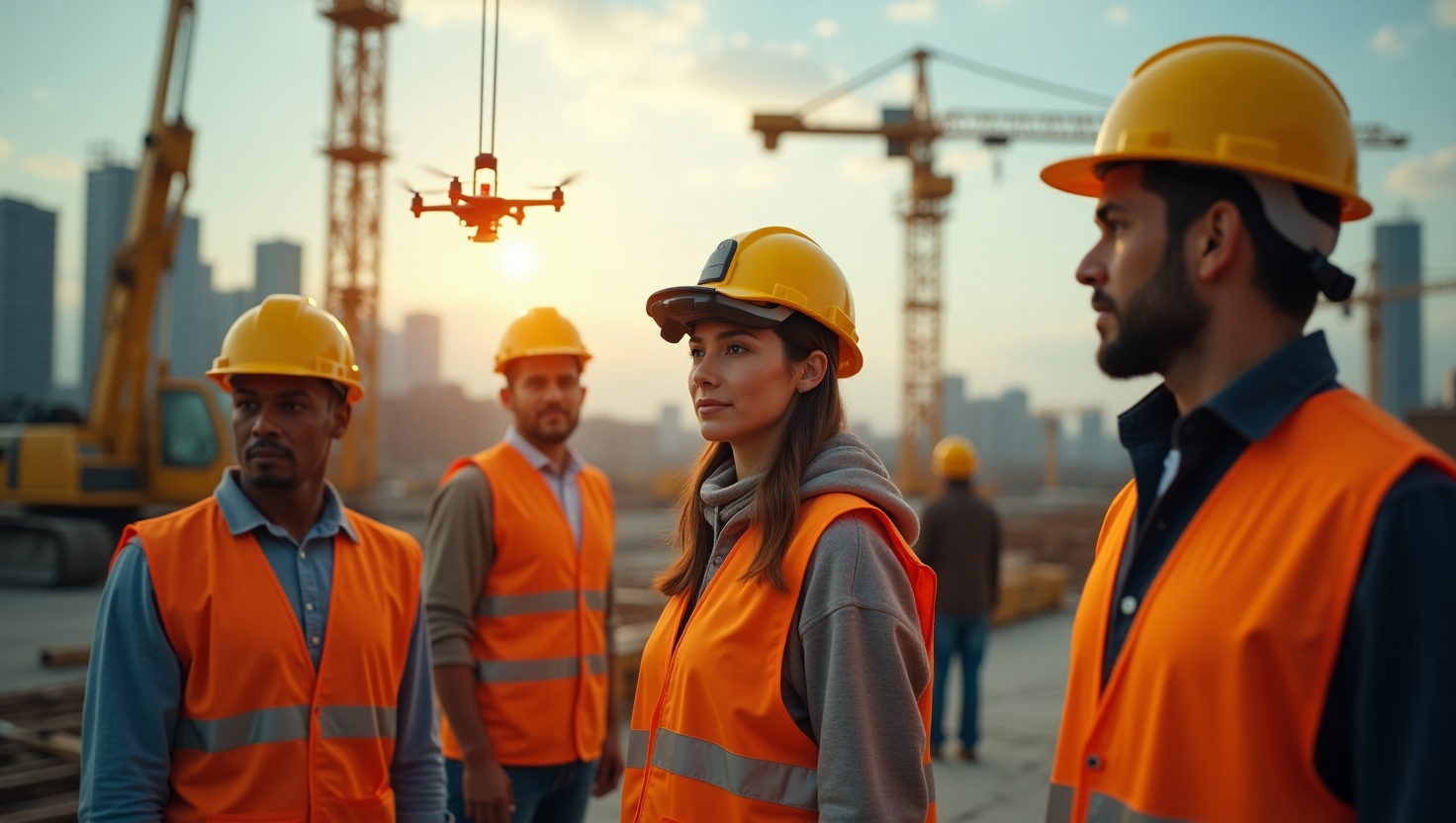
– Drone Surveillance: Equipped with high-resolution cameras and sensors, drones provide aerial views of construction sites, identifying unsafe conditions not easily visible from the ground.
– Automation: AI-driven automation reduces the need for dangerous manual tasks, minimizing human exposure to hazardous situations.
These technologies contribute to fewer accidents and more efficient project management, optimizing both safety and productivity.
Generative AI as a Game Changer
Generative AI, often recognized for its creativity in art and design, is proving to be a transformative tool within construction safety. By simulating various construction scenarios, generative AI can foresee potential hazards and propose optimal safety strategies. Its predictive modeling capabilities are akin to a chess player contemplating future moves, providing invaluable foresight into possible safety breaches before they occur.
– Scenario Simulation: Predicting incidents by simulating thousands of site conditions.
– Safety Strategy Optimization: Crafting comprehensive safety measures based on predictive modeling.
Generative AI’s capacity to virtually eliminate unforeseen accidents is a testament to its game-changing potential in enhancing construction safety measures.
Innovative Safety Tools Powered by AI
The evolution of innovative safety tools powered by AI is ushering in a new age of real-time hazard detection and monitoring. These AI-driven tools are instrumental in maintaining high safety standards on construction sites.
– Smart Helmets: Equipped with sensors and augmented reality, these helmets provide workers with critical safety information, such as exposure to harmful substances.
– Wearable Devices: These gadgets track worker movements and provide alerts for fatigue or excessive stress, preventing accidents due to exhaustion.
Such tools empower construction sites to be proactive rather than reactive, reducing occupational hazards significantly.
The Role of Occupational Safety and Health Administration (OSHA)
The adoption of AI in construction practices necessitates evolving regulatory measures, a challenge that OSHA is actively addressing. As AI technology becomes integral in construction safety, OSHA’s role in setting new standards for AI implementation is crucial. The administration is focusing on:
– Updating Safety Protocols: Integrating AI guidelines into existing safety regulations.
– Training Initiatives: Educating employees and employers about AI tools and compliance.
OSHA’s involvement ensures that AI applications in construction are both safe and standardized, aligning with federal safety regulations.
Case Studies of Successful AI Implementations
Several pioneering companies in the construction industry have successfully implemented AI technologies, showcasing noteworthy improvements in safety.
– Case Study 1: A large construction firm utilized AI-powered drones and predictive analytics, resulting in a 40% decrease in on-site accidents within the first year.
– Case Study 2: By adopting AI-driven wearable devices, a mid-sized construction company significantly lowered its injury rates, enhancing worker well-being.
These examples underline AI’s transformative impact, highlighting its tangible benefits in enhancing safety practices across various construction projects.
Future Trends in AI for Construction Safety
As AI technology continues to advance, numerous trends are poised to further revolutionize construction safety.
– AI-Integrated Robotics: The use of robotic systems for completing high-risk tasks, reducing human exposure to danger.
– Advanced Machine Learning Algorithms: Enhancing the predictive accuracy for incident forecasting will become more prevalent.
– Collaboration with IoT: Integrating AI with the Internet of Things for enhanced data collection and risk assessment.
The future of AI in construction safety looks promising, with continuous innovation pushing the boundaries of what is possible, ultimately creating safer construction environments.
Conclusion
The integration of AI technologies in construction safety is not just a trend but a necessary evolution that aligns with the future of work. As the construction industry increasingly adopts AI-powered safety tools and practices, the promise of reduced accidents and improved worker well-being becomes a reality. Embracing these advancements will enable the construction industry to not only meet but exceed standard safety protocols, ensuring a safer and more productive future. For more insights into tech innovations, visit this article on technology developments.